Camping SVG: A Practical Guide for Crafters, Designers, and DIY Enthusiasts
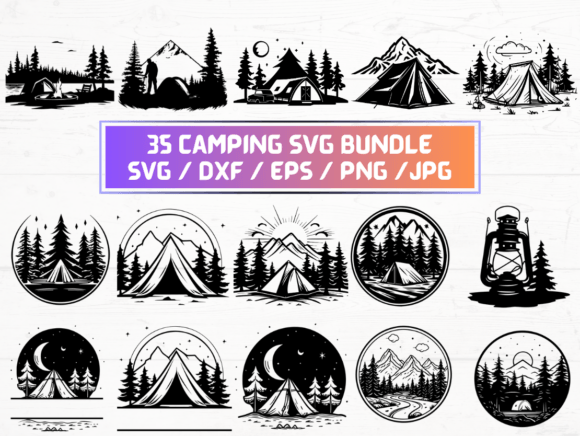
A Camping SVG collection refers to a set of digital vector files specifically themed around outdoor recreation—tents, campfires, mountains, hiking boots, pine trees, RVs, and other nature-inspired motifs. Unlike generic clipart or raster images, these files are built for precision, scalability, and compatibility across cutting machines (like Cricut and Silhouette), design software (Adobe Illustrator, CorelDRAW, Inkscape), and print-on-demand workflows. The listing described—35 SVG, PNG, DXF, EPS, and JPG files, all delivered instantly as a ZIP archive—is representative of what many creators seek when sourcing themed assets for hands-on projects.
What Makes Camping SVG Distinct from Other Outdoor-Themed Graphics?
The key differentiator lies in format versatility and technical readiness. A Camping SVG file is resolution-independent: it renders cleanly whether scaled to fit a 2-inch enamel pin or a 48-inch vinyl banner. Its XML-based structure allows for easy layering, color editing, and node-level adjustments—something raster formats like JPG or PNG can’t offer without quality loss. Meanwhile, the inclusion of DXF files supports CAD and laser-cutting applications, and EPS provides backward compatibility with older professional print workflows. PNGs at 300 dpi with transparent backgrounds serve immediate needs for digital overlays, web graphics, or mockups—no background removal required.
This breadth of formats means one purchase serves multiple tools and goals. A hobbyist using a Cricut Explore Air 2 benefits most from the SVG and DXF files; a graphic designer preparing a client’s eco-tourism brochure may rely on EPS or high-res PNGs; someone building an online store might use the same set across product listings, social media banners, and packaging mockups.
How Does Camping SVG Compare with Alternative Approaches?
There are several ways to acquire camping-themed visuals—each with tradeoffs in control, cost, time, and adaptability.
- Free SVG repositories: Many sites offer free Camping SVG downloads, but licensing is often unclear. Some restrict commercial use, require attribution, or embed watermarks. Files may be low-resolution, poorly structured (e.g., ungrouped paths, inconsistent stroke weights), or lack supporting formats like DXF—limiting their utility for cutting machines.
- Custom illustration services: Hiring a designer to create original camping-themed vectors offers full ownership and tailored aesthetics. However, this typically costs $100–$500+ per design and takes days or weeks—not ideal for time-sensitive projects or iterative prototyping.
- Stock photo subscriptions: Platforms like Shutterstock or Adobe Stock include camping-related PNGs and vectors, but individual licenses may prohibit cutting-machine use or limit downloads per month. Bundles rarely group cohesive themes across formats—meaning users often need to source SVGs, PNGs, and DXFs separately.
- Single-format downloads: Purchasing only SVGs (or only PNGs) works if your workflow is narrow—but limits flexibility. For example, a Silhouette Cameo user who later switches to a Glowforge laser cutter may find SVG insufficient without accompanying DXF or EPS versions.
In contrast, a well-structured Camping SVG bundle—like the one described—balances breadth, clarity, and immediacy. It avoids licensing ambiguity (assuming clear terms are provided), eliminates wait time, and reduces format-hunting overhead. That said, it’s not universally optimal: if you need only one specific icon (e.g., a minimalist tent), buying a full 35-file set may introduce unnecessary redundancy.
Strengths and Realistic Limitations
The primary strength of this type of Camping SVG package is interoperability. Having the same design available in five formats means fewer conversion steps, less risk of distortion during export, and smoother handoffs between team members using different software. The 300 dpi PNGs support high-quality print previews; transparent backgrounds eliminate post-processing for layered designs; and consistent naming conventions (if applied) simplify organization across large libraries.
Limitations are mostly contextual, not technical. These files are static—they don’t animate, respond to data, or integrate with web frameworks. They’re also stylistically fixed: if the included tent icon uses thick line art and you need thin-line sketch style, editing will require intermediate vector skills. Likewise, while EPS files ensure broad compatibility, they don’t support modern features like transparency blends or gradient meshes the way native SVG or AI files do.
Color is another consideration. Most Camping SVG bundles deliver files in default black or grayscale—intentionally neutral to allow user-defined palettes. That’s helpful for branding consistency but means no pre-made seasonal palettes (e.g., sunset orange + forest green) unless explicitly included.
When Is This Camping SVG Bundle the Right Fit?
This resource suits users who value efficiency across multiple production stages. Consider it appropriate if you:
- Regularly cut vinyl, iron-on, or cardstock—and rely on both SVG and DXF for machine compatibility;
- Create merch (T-shirts, mugs, stickers) and need clean, scalable art plus ready-to-use PNGs for mockup generators;
- Manage small business assets and prefer owning licensed files outright rather than managing recurring subscription permissions;
- Teach crafting workshops and want a consistent, classroom-ready set of outdoor-themed elements;
- Are building a themed product line (e.g., “National Parks Collection”) and need cohesive, technically sound base assets to customize.
It’s especially practical for those already familiar with importing and ungrouping vector layers—since no editing instructions are included, basic familiarity with vector workflows helps maximize utility.
When Might Another Option Be Better?
If your goal is highly specialized—such as creating interactive camping maps for a mobile app, generating parametric trail signs, or developing AR-enabled campsite visualizations—this static Camping SVG bundle won’t meet those needs. Similarly, educators needing editable lesson plans with embedded discussion prompts or accessibility features (like alt-text-ready SVGs with semantic grouping) may need supplemental resources.
For one-off personal use—say, designing a single birthday banner for a camping-themed party—a free, openly licensed SVG may suffice. And if brand identity requires strict adherence to custom typography, iconography rules, or proprietary color systems, even a well-designed Camping SVG set may require significant reworking to align.
Making a Practical Decision
Evaluating a Camping SVG package comes down to three questions: What tools am I using now? What outputs do I need to produce—and how soon? How much customization do I expect to do?
If your answer includes Cricut Design Space, Silhouette Studio, Canva Pro, or Adobe Creative Cloud—and you regularly output physical crafts, digital presentations, and print-ready files—then a multi-format bundle delivers measurable time savings. If your workflow leans heavily toward web development, data visualization, or motion graphics, you’ll likely need additional tools or conversions beyond what’s provided.
Also consider long-term maintenance. A ZIP folder of organized, consistently named files is easier to archive, search, and reuse than scattered downloads. But without version control or cloud sync, it’s still up to you to back it up and track usage rights—especially if sharing with collaborators.
Ultimately, Camping SVG isn’t about replacing skill or creativity—it’s about removing friction between idea and execution. Whether you’re prototyping a new line of outdoor gear decals, illustrating a children’s book about backpacking, or refreshing your Etsy shop’s seasonal banner, having technically sound, thematically aligned assets on hand lets you focus on what matters most: thoughtful design and intentional making.