Easter Egg Coloring Page for Kids: A Strategic Creative Asset for Modern Creators and Educators
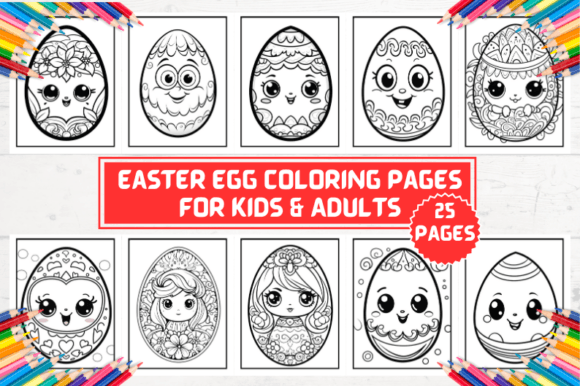
For professionals navigating the intersection of digital content, early childhood engagement, and scalable creative entrepreneurship, the Easter Egg Coloring Page for Kids represents far more than a seasonal activity sheet. It’s a high-fidelity, production-ready digital asset—specifically, a curated collection of 25 Easter Egg Coloring Pages designed for immediate deployment across educational, retail, publishing, and marketing workflows. This isn’t just printable fun; it’s a purpose-built, KDP-optimized resource engineered for speed, consistency, and cross-platform utility.
What Exactly Is This Easter Egg Coloring Page for Kids Collection?
This is not a generic clipart bundle or a low-resolution PDF scraped from a free design site. It’s a professionally structured digital coloring book comprising 25 distinct Easter Egg Coloring Pages, each delivered as a standalone, print-ready file. Every page measures 8.5″ x 11″, adheres to 300 DPI resolution, and is supplied in both PNG (transparent background) and high-resolution JPG formats. The interior design prioritizes clean line art—bold enough for young hands to trace, detailed enough to sustain attention, yet uncluttered to support focus and fine motor development.
Crucially, this collection is Amazon KDP upload ready. That means no reformatting, no bleed adjustments, no guesswork around margins or color profiles. Each file meets Kindle Direct Publishing’s technical specifications out of the box—enabling creators to launch a physical or digital coloring book on Amazon within minutes of download. For freelancers building client-facing product suites—or educators assembling custom learning kits—it eliminates hours of prepress labor.
Beyond Printables: How This Fits Into Broader Creative and Business Trends
The rise of the Easter Egg Coloring Page for Kids as a professional-grade asset reflects three converging industry shifts: the normalization of digital-first creative workflows, the growing demand for “plug-and-play” educational resources, and the strategic repurposing of seasonal content into evergreen value streams.
First, creators—from indie publishers to curriculum designers—are increasingly adopting asset-first production models. Rather than building products from scratch each season, they invest in modular, reusable components. These 25 Easter Egg Coloring Pages function like design atoms: one can be dropped into a classroom handout, another embedded in a branded email campaign, a third adapted into SVG format for Cricut-based craft kits. This modularity supports rapid iteration without sacrificing quality—a necessity in markets where audience expectations for polish and personalization continue to rise.
Second, there’s accelerating demand for pedagogically grounded, screen-adjacent activities. With children spending more time on devices—and caregivers seeking intentional offline alternatives—the coloring page has evolved from passive pastime to cognitive tool. Research affirms that structured coloring supports visual discrimination, bilateral coordination, and emotional regulation. These pages are intentionally designed with varying line weights and spatial complexity—not just for aesthetic appeal, but to scaffold developmental progression. A creator selecting this set isn’t choosing decoration; they’re selecting an evidence-informed engagement lever.
Why Professionals Are Prioritizing Ready-to-Use Easter Egg Coloring Pages Now
Time is the most constrained resource for today’s creators. A freelance graphic designer pitching a holiday-themed social media campaign for a preschool brand doesn’t have bandwidth to illustrate 25 unique eggs from concept to final vector. A homeschool co-op leader preparing March-April lesson plans needs reliable, copyright-cleared visuals—yesterday. An Etsy seller launching a “Spring Activity Bundle” requires assets that convert instantly into printables, Canva templates, or laminated flashcards.
This collection answers those pressures with precision. Its 25 PNG files allow for seamless layering in design tools—think adding watercolor textures in Photoshop or overlaying animated confetti in After Effects for digital storytime videos. Its 300 DPI JPGs ensure crisp output whether printed on home inkjets or commercial offset presses. And because every egg features original, non-stock illustration—no repeated motifs, no AI-generated ambiguity—it delivers authenticity at scale.
Consider a real-world application: A children’s book author developing a companion activity kit for their upcoming Easter-themed title purchases this set, then uses individual egg designs as chapter headers, character-inspired borders, or interactive “find-the-pattern” challenges. The same files become Instagram carousel slides, printable party favors, and PDF bonuses in their email list. One investment, five distribution channels—without licensing friction or attribution overhead.
Design Integrity Meets Operational Efficiency
What separates this Easter Egg Coloring Page for Kids collection from commodity alternatives is its dual commitment—to artistic intentionality and production pragmatism. Each egg features balanced negative space, consistent stroke weight, and thoughtful motif variation: geometric patterns for pattern-recognition practice, nature-inspired elements (bunnies, tulips, chicks) for thematic vocabulary building, and abstract swirls for open-ended creativity. There are no copyrighted characters, no trademarked symbols—just universally resonant, commercially safe iconography.
From a technology standpoint, the delivery format anticipates real-world usage. PNGs preserve transparency for compositing; JPGs guarantee universal compatibility with printers, LMS platforms, and basic editing apps. The uniform 8.5″ x 11″ size aligns with standard paper handling—eliminating the need for scaling or cropping in school supply orders or bulk printing jobs. Even the naming convention (e.g., EasterEgg_07.png) supports automated workflows in design systems or DAM (Digital Asset Management) environments.
Strategic Implications for Entrepreneurs and Educators
For entrepreneurs, this collection exemplifies the shift toward micro-productization: packaging discrete, high-demand creative units that serve multiple buyer personas simultaneously. A single ZIP file can fuel:
- Educators building differentiated spring centers or occupational therapy worksheets;
- Print-on-demand sellers creating themed wall art or greeting cards;
- Content marketers designing lead magnets (“Download our 25 Easter Egg Coloring Pages + Bonus Spring Activity Guide”);
- Church and community organizers assembling Easter Sunday take-home kits;
- KDP authors compiling expanded editions or series bundles (“Easter Edition Vol. 1: 25 Eggs + 10 Bonus Patterns”).
Each use case leverages the same foundational asset—but with distinct value propositions. That multiplicity increases ROI per acquisition and reduces customer acquisition cost over time. It also enables A/B testing: What resonates more with parents—detailed floral eggs or bold, minimalist shapes? Data gathered from download analytics or engagement metrics informs future design decisions and product roadmaps.
Looking Ahead: Where This Model Is Headed
The success of this Easter Egg Coloring Page for Kids collection signals a broader evolution in how creative professionals source, deploy, and monetize visual assets. We’re moving beyond static libraries toward context-aware design systems—collections built not just for aesthetics, but for interoperability, pedagogy, and platform-native performance.
Future iterations will likely integrate accessibility metadata (alt text descriptors for each egg), multilingual labeling options, or even AR-enabled versions where scanned eggs trigger audio stories or animation. But the core principle remains unchanged: professionals need assets that respect their time, honor their audience’s developmental needs, and integrate effortlessly into existing tools and processes.
In that light, these 25 Easter Egg Coloring Pages aren’t merely a seasonal download—they’re a benchmark for what purpose-driven, production-optimized creative work looks like in 2024 and beyond. They meet kids where they are (curious, tactile, imaginative), and creators where they are (pressed for time, accountable for outcomes, fluent in digital ecosystems). That alignment—between human need and operational reality—is where sustainable creative value is now being built.