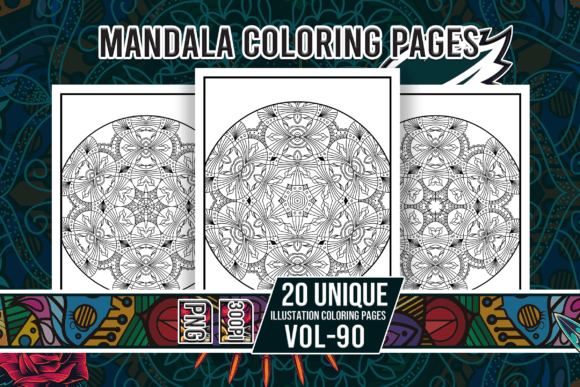
Mandala Coloring Pages Vol-90 Interiors: A Print-Ready Resource for Mindful Design and Commercial Use
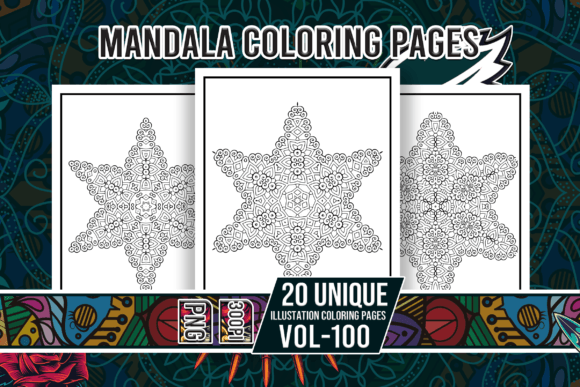
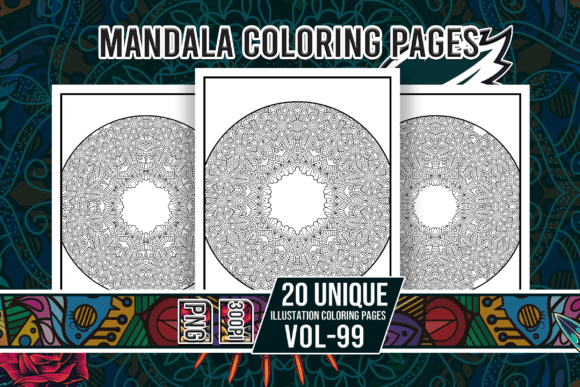
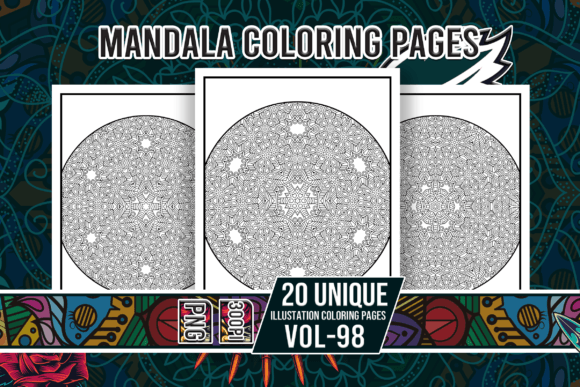
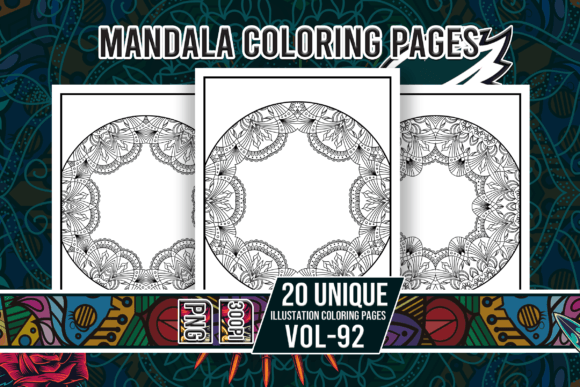
Within the expanding landscape of therapeutic visual tools and digital publishing assets, Mandala Coloring Pages Vol-90 Interiors represents a distinct convergence of artistic intention, functional utility, and commercial readiness. Unlike generic coloring collections, this volume centers specifically on interior-focused mandala compositions—patterns that integrate architectural motifs, spatial rhythm, and layered interior geometry into traditional circular symmetry. The result is not merely decorative repetition but a curated set of 20 high-resolution PNG files designed for both personal engagement and scalable business deployment.
Interior Mandala as a Functional Art Form
The term “interior” in Mandala Coloring Pages Vol-90 Interiors signals more than subject matter—it reflects structural thinking. These illustrations embed floor-plan echoes, window lattice rhythms, ceiling medallion repetitions, and furniture-outline silhouettes within concentric bands. One page may feature a central archway motif flanked by repeating pilaster forms; another layers doorframe outlines with tessellated tile patterns radiating outward. This interior language makes the collection especially resonant for designers, educators teaching spatial literacy, and therapists guiding clients through embodied environmental visualization.
From a cognitive standpoint, interior mandalas support dual-layer attention: the outer geometry trains peripheral pattern recognition, while interior details invite focal exploration—mirroring how humans naturally scan rooms or navigate built environments. In classroom settings, art teachers have used similar motifs to scaffold lessons on proportion, symmetry, and scale. Architecture students employ them as warm-up exercises before drafting, reinforcing spatial memory without technical constraints.
Technical Specifications Designed for Real-World Output
The 20-page collection is delivered exclusively as A4-sized PNG files—each optimized at 300 DPI and precisely dimensioned to 8.5 x 11 inches. This specification avoids common pitfalls seen in KDP submissions: no bleed zones require trimming, no RGB-to-CMYK conversion errors, and no embedded transparency that triggers Amazon’s preflight rejection. Every file opens cleanly in Adobe Photoshop, Affinity Designer, or even free tools like GIMP, allowing immediate resizing, contrast adjustment, or layer-based annotation without quality loss.
Because each illustration is vector-derived and rasterized at print-grade resolution, users retain flexibility across formats. An educator printing class sets can use standard home inkjet printers without visible pixelation. A KDP publisher preparing a paperback edition can import files directly into Kindle Direct Publishing’s template system—no additional cropping or margin recalibration needed. Even large-format poster printers handle the files reliably, preserving fine linework down to 0.25 pt strokes.
Workflow Integration Across User Groups
Different professionals interact with Mandala Coloring Pages Vol-90 Interiors through distinct operational rhythms—and the collection accommodates each without friction.
- Creative Entrepreneurs: Those building multiple KDP coloring book titles benefit from having 20 ready-to-assemble pages that share cohesive interior vocabulary. Rather than sourcing disparate illustrations, they can compile Vol-90 Interiors with complementary volumes (e.g., Vol-87 Botanicals or Vol-93 Geometric Landscapes) to create thematic series—“Architectural Mindfulness,” “Domestic Serenity,” or “Interior Harmony”—with consistent stylistic logic.
- Therapists & Counselors: Clinicians report higher client retention when using contextually grounded imagery. A trauma-informed practitioner might select mandalas containing open doorway motifs to support safety visualization, or choose enclosed courtyard layouts to reinforce containment. Because all 20 pages are downloadable and reusable, printed copies can be distributed during sessions, then reprinted as needed—no licensing limits or per-use fees.
- Educators & Curriculum Developers: The interior focus supports cross-disciplinary applications: math teachers use radial symmetry to teach angles and fractions; ESL instructors label architectural elements (“arch,” “lintel,” “cornice”) directly onto printed pages; occupational therapists incorporate fine-motor tracing of window mullions to improve hand-eye coordination.
Why PNG Format Matters Beyond Convenience
While many coloring page bundles offer PDFs or JPEGs, the exclusive use of PNG in Mandala Coloring Pages Vol-90 Interiors serves specific functional ends. PNG preserves hard-edged line integrity without JPEG compression artifacts—critical when fine interior detailing (like balustrade spindles or coffered ceiling grids) must remain crisp after scaling. Its native alpha channel support also allows advanced users to isolate foreground linework from background textures in post-processing—a capability absent in flattened JPEGs.
Moreover, PNG’s lossless compression ensures file sizes remain manageable (typically 2–4 MB per page) without sacrificing fidelity. This balances download speed for international users with archival stability—unlike heavily compressed JPEGs that degrade with repeated saves, or oversized TIFFs that strain email servers and cloud storage quotas.
Commercial Considerations for KDP Publishers
For creators building passive income streams via Amazon KDP, the distinction between “KDP-ready” and “KDP-compatible” carries tangible consequences. Many public-domain or low-cost assets require manual adjustments—adding bleed, correcting margins, verifying grayscale compatibility, or converting color profiles. Mandala Coloring Pages Vol-90 Interiors eliminates those steps: every file meets KDP’s exacting standards for interior files in black-and-white coloring books.
This reliability translates directly into time savings. One independent publisher documented reducing their average book assembly time from 6.2 hours to 1.4 hours per title after adopting similarly vetted PNG collections. That reclaimed capacity enables deeper market research, stronger cover design iteration, or expanded keyword optimization—all factors influencing long-term visibility in Amazon’s algorithm.
Additionally, the collection’s emphasis on interior themes opens underutilized keyword pathways: terms like “architectural coloring pages,” “home interior mandalas,” “room design coloring sheets,” and “spatial mindfulness coloring” exhibit moderate search volume with comparatively low competition. Integrating these phrases organically into book descriptions, backend keywords, and series titles leverages semantic relevance without keyword stuffing.
Design Integrity and Reproducibility
A hallmark of Mandala Coloring Pages Vol-90 Interiors is its adherence to balanced density—not overcrowded, not sparse. Each composition maintains a deliberate ratio of negative space to linework, ensuring usability across age groups and skill levels. Children aged 7–10 can confidently color defined room zones, while adults appreciate subtle variations in line weight that suggest depth (e.g., thicker outlines for doorframes, thinner lines for wallpaper patterns).
This intentional spacing also supports accessibility. Users with visual processing differences report reduced fatigue when navigating interiors with clear spatial hierarchy—distinct zones for “floor,” “wall,” “ceiling,” and “furniture” avoid visual ambiguity. Likewise, educators working with neurodiverse learners highlight how predictable interior framing helps anchor attention during extended coloring tasks.
Scalable Application Beyond Single-Use Printing
The license permits unlimited printing and reuse—meaning a single purchase serves multiple purposes over time. A researcher studying attention restoration theory might print identical pages across longitudinal sessions, tracking changes in coloring duration or zone selection. A community center coordinator could reproduce pages for weekly mindfulness workshops, adjusting paper stock based on group needs (e.g., thicker cardstock for children, standard copy paper for seniors). A graphic designer prototyping interior branding concepts might trace over mandala floorplans to test layout proportions before committing to full mockups.
This adaptability extends to hybrid workflows. Some users combine pages digitally—placing a Vol-90 interior mandala as a base layer in Procreate, then adding custom annotations, color palettes, or contextual photography before exporting final presentations. Others scan completed physical versions and run optical character recognition (OCR) on handwritten reflections, turning coloring sessions into qualitative data sources.
Contextual Relevance in Evolving Creative Markets
As consumer interest shifts toward meaning-driven creation—rather than purely aesthetic output—the interior mandala occupies a unique niche. It bridges domestic familiarity with contemplative structure, offering grounding without rigidity. In an era where “cozycore,” “quiet luxury,” and “slow living” aesthetics dominate social platforms, these pages resonate because they reflect lived experience: thresholds crossed, rooms inhabited, spaces personalized.
Simultaneously, the rise of AI-assisted design tools has heightened demand for human-curated, stylistically coherent assets. Algorithms generate endless patterns, but rarely with intentional interior grammar. Mandala Coloring Pages Vol-90 Interiors provides what AI currently cannot replicate: contextual consistency, tactile line sensitivity, and spatial empathy—qualities discernible to experienced users and increasingly valued in premium creative markets.
Practical Implementation Tips
To maximize utility, consider these evidence-informed approaches:
- Batch processing: Use Adobe Bridge or XnConvert to apply uniform brightness/contrast adjustments across all 20 files before importing into KDP or printing.
- Annotation layering: Import PNGs into vector editors like Inkscape to add numbered zones or instructional callouts—ideal for educational or therapeutic guides.
- Progressive difficulty sequencing: Arrange pages from open-plan simplicity (fewer interior divisions) to multi-room complexity when assembling a full-coloring-book manuscript.
- Hybrid physical-digital use: Print on perforated tear-out paper for workshops, then scan completed pages to build a personal archive of evolving interpretations.
Ultimately, Mandala Coloring Pages Vol-90 Interiors functions less as static content and more as a flexible medium—one that adapts to intention, accommodates expertise, and retains integrity across contexts. Its value lies not only in what it contains, but in how reliably it enables next steps: whether that’s uploading a polished KDP interior, facilitating a mindful session, scaffolding spatial learning, or simply returning attention to the quiet architecture of presence.