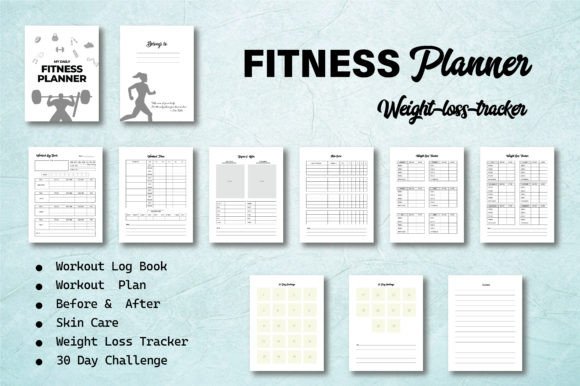
Fitness Planner and Weight Loss Tracker
“Take care of your body. It’s the only place you have to live.” — Jim Rohn. That line lands differently when you’re juggling back-to-back Zoom calls, packing school lunches at 6 a.m., editing a client project at midnight, or trying to squeeze in a 20-minute workout before the dog needs walking. Real life doesn’t pause for perfect nutrition or ideal gym conditions—and that’s exactly why a practical, adaptable tool like the Fitness Planner and Weight Loss Tracker matters.
This isn’t another glossy, intimidating journal full of blank meal grids and vague “motivational quotes.” It’s a thoughtfully structured, ready-to-use system designed for people who want clarity—not complexity—when managing their health. Whether you’re tracking intermittent fasting windows between freelance deadlines, prepping weekly meals while homeschooling, or building a sustainable routine after years of on-again-off-again dieting, this planner meets you where you are.
Where and When You’ll Actually Use It
You’ll pull it out during your Sunday morning coffee—before the day’s demands take over—when you’re planning meals for the week and aligning workouts with your actual schedule (not an idealized one). You’ll open it midday, after a lunch meeting where you skipped protein and grabbed a muffin, to jot down what happened *and* how you’ll adjust tomorrow. You’ll flip to the fasting log on a Tuesday evening, checking whether your 16:8 window held up despite a late client call—and use that insight to shift your start time next week.
It lives on your desk beside your laptop, not buried in a drawer. It travels in your tote bag for quick notes after a walk around the block. It sits next to your tablet while you watch a cooking tutorial, helping you translate inspiration into a real meal plan—not just a Pinterest pin.
Real People, Real Scenarios
A small business owner uses the editable PPT source file to customize the goal-setting pages with her brand colors and logo—then prints copies for her wellness coaching clients. She adds her own reflection prompts (“What energy level did I notice after Day 3 of clean eating?”) because generic questions don’t spark real change.
A high school PE teacher adapts the fitness goal tracker for student projects—printing the 6″ x 9″ version so teens can carry it in their backpacks. She removes the calorie-counting sections (age-appropriate) and emphasizes movement consistency, hydration, and sleep tracking instead. The clean, minimal design means no distractions—just space to observe habits without judgment.
A freelance graphic designer working remotely uses the PDF version on his iPad with Apple Pencil. He fills in the weekly food log during lunch breaks, then exports his entries as PDFs to review trends with his nutritionist. Because the file is KDP-tested and bleed-free, he also repurposes select spreads into a low-cost digital mini-course—“30 Days of Mindful Eating”—for his email list.
A new mom returning to fitness starts with the intro page to define *her* version of success: not a number on the scale, but “walking 10K steps three times this week” or “cooking one new vegetable-based dinner.” She uses the “Monitor Your Fast” section not for strict IF rules—but to gently experiment with timing meals around naptimes and pumping schedules.
Why Design Choices Matter More Than You Think
The 8.5 x 11 and 6″ x 9″ dimensions aren’t arbitrary. The larger size gives room for detailed meal prep notes and weekly reflections; the smaller one fits in a purse, diaper bag, or gym locker. The clean, minimal design reduces decision fatigue—you’re not staring at cluttered layouts or wondering which column to fill first. And “no bleed” isn’t just a printing term—it means your handwritten notes stay fully visible, even on tight margins.
Having editable source files (PDF, PPT, JPEG) means you’re never locked in. If you run a blog about sustainable weight loss, you can swap in your own imagery and fonts. If you teach nutrition workshops, you can add your disclaimer language or licensing info before distributing printed copies. This flexibility supports ownership—not just consumption.
What to Consider Before You Begin
This planner works best when you treat it as a living document—not a test you need to pass. If you skip a day? Flip to the next page and keep going. If your original goal shifts (say, from “lose 20 lbs” to “build stamina for hiking with kids”), the goal development section lets you revise with intention—not guilt.
Also consider your tech comfort level. While the PDF is print-ready and KDP-optimized, the editable PPT file requires PowerPoint or compatible software. If you prefer handwriting, the high-resolution interiors ensure crisp lines and smooth ink flow—no ghosting or bleed-through, even with gel pens.
And remember: consistency beats perfection. One filled-in fasting log entry counts. Three checked-off fitness goals in a row count. A single note like “Felt energized after breakfast with eggs + avocado” counts. That’s how awareness builds—and awareness is where lasting change begins.
More Than Tracking—It’s Translation
The Fitness Planner and Weight Loss Tracker bridges the gap between intention and action. It turns vague wishes (“I should eat better”) into concrete steps (“I’ll prep hard-boiled eggs Sunday night for Tuesday/Wednesday lunches”). It transforms “I want to move more” into scheduled blocks aligned with your calendar—not someone else’s.
That’s why educators use it to model self-regulation skills. Why content creators adapt its templates for audience giveaways. Why healthcare professionals recommend it to patients who feel overwhelmed by apps and conflicting online advice. It doesn’t replace professional guidance—but it makes guidance easier to apply.
At its core, this planner respects your time, your autonomy, and your unique rhythm. It doesn’t assume you have two hours for meal prep or a home gym. It assumes you have a body worth caring for—and tools that fit your life, not the other way around.
If you’ve ever closed a fitness app frustrated by notifications you ignore, or tossed aside a journal because it felt too rigid or too sparse, this is different. It’s quiet. It’s flexible. It’s built for real days—with real interruptions, real wins, and real progress measured in small, honest steps.