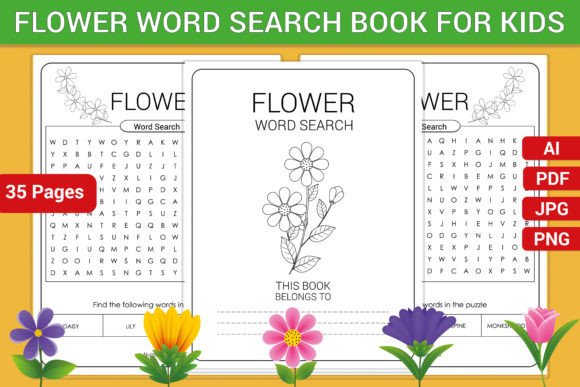
Flower Word Search Book for Kids
Imagine your child pausing mid-game to trace the letters of “Tulip,” then pointing excitedly at the same word hidden among a grid of letters—eyes lighting up with recognition and quiet pride. That’s the kind of focused, joyful learning built into the Flower Word Search Book for Kids. This isn’t just another printable activity—it’s a thoughtfully structured, ready-to-use resource designed around how children actually learn: through repetition, visual association, and gentle challenge.
A Tool That Grows With Your Child’s Curiosity
The book contains 35 pages, each featuring four flower names—140 unique blooms in total—from common favorites like “Rose” and “Daisy” to more distinctive ones like “Zinnia” and “Freesia.” That balance matters. Younger readers (ages 5–7) benefit from familiar words they can sound out or recognize by shape. Older kids (8–10) stretch their vocabulary and spelling skills with less common terms—all while staying grounded in a theme that feels playful, not academic.
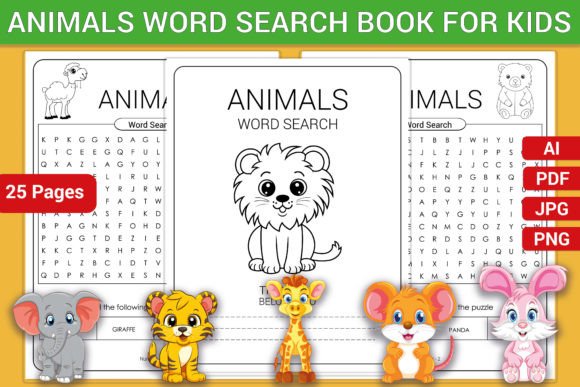
Each page is clean, uncluttered, and optimized for early readers: large fonts, generous spacing, and no distracting graphics competing for attention. There’s no story or instruction required—just print, hand over a pencil, and let curiosity take over.
Why Educators Reach for This Book First
Classroom teachers appreciate how seamlessly this fits into science units on plant life cycles or spring-themed literacy centers. One third-grade teacher uses it as a warm-up before reading nonfiction texts about pollination—students circle flower names, then discuss which insects visit them. A homeschool parent pairs it with nature journaling: after finding “Lavender” in the grid, her daughter sketches it and notes its scent and color.
What makes it especially practical for educators? It’s fully editable via the included AI source file—so you can swap in local native flowers, adjust difficulty, or translate terms for bilingual learners. And because all 35 pages are delivered as individual PNG and JPG files, inserting them into digital learning platforms (like Google Slides or Seesaw) takes seconds—not hours.
For Creators Building a KDP Business
If you’re launching or expanding a high-content KDP portfolio, the Flower Word Search Book for Kids checks multiple strategic boxes. It’s pre-formatted to Amazon’s exact specs: 8.5 × 11 inches, no bleed, CMYK-ready, and tested live on KDP. No guesswork. No formatting rejections. Just upload the PDF and go.
More importantly, it’s built for scalability. The unique interior design avoids generic clipart—it uses original, high-resolution floral motifs that support branding across a series (think Vol. 2: *Butterfly Word Search*, Vol. 3: *Garden Animal Word Search*). You own the source file, so future volumes retain consistent typography, spacing, and visual tone—critical for building reader trust and repeat purchases.
And because it targets a well-established niche—flower-themed educational activities—you’re not competing on novelty alone. You’re meeting real search intent: parents typing “flower word search for kids pdf”, teachers searching “printable flower vocabulary activity”, or gift buyers looking for screen-free spring break ideas.
Parents and Caregivers: Simplicity With Substance
There’s no setup. No login. No subscription. Just download, print, and go. For busy caregivers juggling work, meals, and school drop-offs, that immediacy is everything. One mom keeps a stack of printed pages in her car console—perfect for waiting rooms or rainy afternoons. Another laminates a few sheets and uses dry-erase markers so her twins can reuse them during long drives.
It also works quietly behind the scenes on foundational skills: letter recognition, left-to-right tracking, visual scanning, and fine motor control (especially when used alongside tracing or coloring extensions). You won’t hear “I’m bored”—you’ll hear “Can I find *all* the flowers?”
Hobbyists and Therapists: Calm, Purposeful Engagement
Occupational therapists have shared how flower-themed word searches support attention regulation in neurodivergent children. The predictable structure lowers cognitive load, while the botanical theme offers sensory-rich discussion points (“What does a sunflower look like? How tall does it grow?”). Similarly, art therapists sometimes use the pages as prompts—after completing a search, kids draw the flowers they found or describe their favorite one.
For adult hobbyists exploring gentle creative routines, the book doubles as a low-pressure entry point into floral literacy. Flip through the pages, learn a new name, sketch it in a notebook, or research its growing season. It’s not designed for adults—but its clarity and thematic depth make it unexpectedly useful beyond its stated audience.
What Makes This More Than Just Another Printable?
- Quality you can trust: Every image is high-resolution, properly scaled, and tested for crisp printing—even on home inkjets.
- Flexibility baked in: Need grayscale versions? Want to add answer keys? The AI source file gives you full control—no design software required.
- No hidden limits: Unlike some templates, this includes both PNG and JPG exports, so you can adapt for web, social, or print without conversion headaches.
- Real-world validation: It’s not theory—it’s been uploaded, reviewed, and successfully published on KDP, with zero formatting issues reported.
This isn’t about filling time. It’s about creating moments where learning feels like discovery—and where a simple word search becomes a doorway to botany, language, patience, and joy. Whether you’re guiding a child’s first steps into reading, scaling a KDP catalog, supporting a student’s growth, or simply seeking calm focus for yourself—the Flower Word Search Book for Kids meets you where you are, with clarity and care.