Ghost Halloween Coloring Pages for Kids
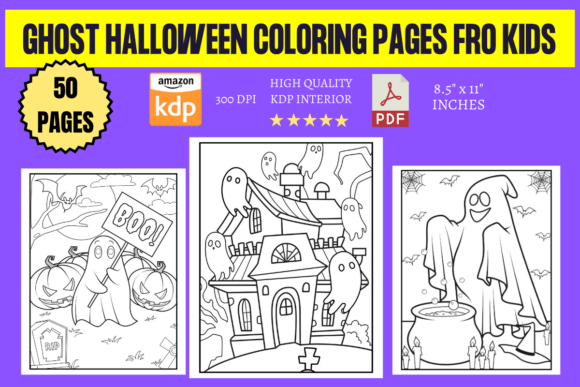
If you're sourcing high-quality, ready-to-use creative assets for seasonal kids’ activities—or building a digital product line around holiday-themed printables—Ghost Halloween Coloring Pages for Kids is a smart, practical choice. This isn’t just another generic coloring pack. It’s a thoughtfully curated set of 30 original ghost-themed illustrations designed specifically for young colorists, with clean lines, friendly proportions, and ample interior space to encourage creativity—not frustration.
Visually, the pages strike a balance between playful and polished. Each ghost has personality: some grin mischievously, others float with gentle swirls or hold tiny pumpkins, bats, or candy corn. There are no overly intricate textures or micro-details that would overwhelm early elementary hands—just confident, scalable outlines at 300 DPI resolution. The style leans into modern cartoon charm: rounded forms, expressive eyes, and subtle visual storytelling (a ghost reading a book, one peeking from behind a tombstone, another wearing sunglasses). It’s not spooky—it’s sweetly spirited.
Why These Pages Work So Well Across Real Projects
This collection shines where many seasonal assets fall short: versatility without compromise. Because each page is delivered as an individual PNG file (8.5″ × 11″, print-ready), it integrates seamlessly into multiple workflows. Designers building activity kits for classrooms or libraries can drop them straight into Canva or Adobe InDesign layouts. Bloggers running October-themed parenting resources can embed single pages in posts or convert them into downloadable lead magnets. Small publishers prepping for Amazon KDP know exactly what they’re getting—a fully formatted, bleed-free, upload-ready interior. No resizing, no pixelation, no guesswork.
For crafters and small business owners, these pages double as flexible base layers. Add foil accents in post-print embellishment, use them as stencils for fabric painting, or layer them under transparent vellum for layered greeting cards. The high-resolution JPG versions also hold up beautifully when scaled down for social media story templates—think Instagram Reels backgrounds or Pinterest pins promoting “Halloween Activity Ideas for Ages 4–8.”
Design Integrity Meets Practical Delivery
What makes Ghost Halloween Coloring Pages for Kids stand out isn’t just aesthetics—it’s execution discipline. Every file is optimized for real-world use: consistent margins, centered artwork, uniform line weight (1.5–2 pt strokes), and true white backgrounds (no transparency artifacts). That means no extra cleanup before printing, no surprises when converting to PDF, and zero compatibility hiccups across operating systems or printers.
You’ll notice thoughtful spacing around each ghost—never cramped, never floating in dead space. That breathing room matters. It gives kids room to stay inside the lines *and* room to add their own doodles in the margins. For educators, that supports fine motor development; for marketers, it translates to longer engagement time per page. And because the files are delivered as both PNG and JPG, you retain flexibility: PNG for layered digital edits, JPG for fast web loading or KDP uploads.
How to Evaluate Fit Before You Commit
Before adding this to your asset library or product pipeline, ask three quiet but critical questions:
- Does the tone match your audience’s expectations? These ghosts lean cheerful—not eerie, not sarcastic, not ironic. They suit preschool programs, church VBS materials, or indie toy brands—but likely won’t resonate with goth-leaning teen apparel lines or edgy adult coloring niches.
- Are your production tools compatible? Since files are raster-based (not vector), avoid using them for large-format signage or embroidery digitizing. But for anything under 24″ wide—including school newsletters, Etsy printable shops, or classroom handouts—they perform flawlessly.
- Is licensing aligned with your use case? This is a commercial-use package: you may resell printed copies, bundle them into paid activity kits, or use them in client deliverables (e.g., designing a Halloween party pack for a daycare). Just remember—you’re licensing usage rights, not copyright ownership of the designs themselves.
Pairing Smartly With Other Design Assets
These coloring pages don’t exist in isolation—and they shouldn’t be treated that way. Think of them as strong supporting players in a broader design system. Pair them with a clean, legible sans serif (like Montserrat or Open Sans) for cover titles or instruction text. If you’re designing packaging for a physical coloring book, let the ghost art dominate the front, then anchor the back with a restrained serif (Lora or Merriweather) for age recommendations and safety notes. For digital promotions, overlay minimal typography—short phrases like “Spooktacular Fun!” or “Color & Create”—in a bold, friendly display font that echoes the roundness of the ghosts’ shapes.
Avoid over-designing around them. Their strength lies in simplicity. Let the ghosts breathe. Use negative space intentionally. Add color only where it enhances clarity—not decoration.
Final Thoughts for Creators Who Value Craft Over Clutter
Ghost Halloween Coloring Pages for Kids delivers what seasoned designers, publishers, and small business owners actually need: reliability, clarity, and quiet professionalism. It doesn’t shout. It doesn’t try too hard. It solves specific problems—how to get quality, themed, kid-friendly content into hands quickly, consistently, and without technical friction.
That’s rare in seasonal digital assets, where so much defaults to clip-art cliché or overwrought illustration. Here, the restraint is intentional. The consistency is engineered. And the 30-page count? Not filler—it’s calibrated. Enough variety to sustain interest across multiple sessions, but not so many that curation suffers or cohesion breaks down.
Whether you're prepping for back-to-school + Halloween crossover campaigns, expanding your Etsy printable shop, or building branded activity content for a children’s wellness brand, this set earns its place—not as decoration, but as infrastructure.